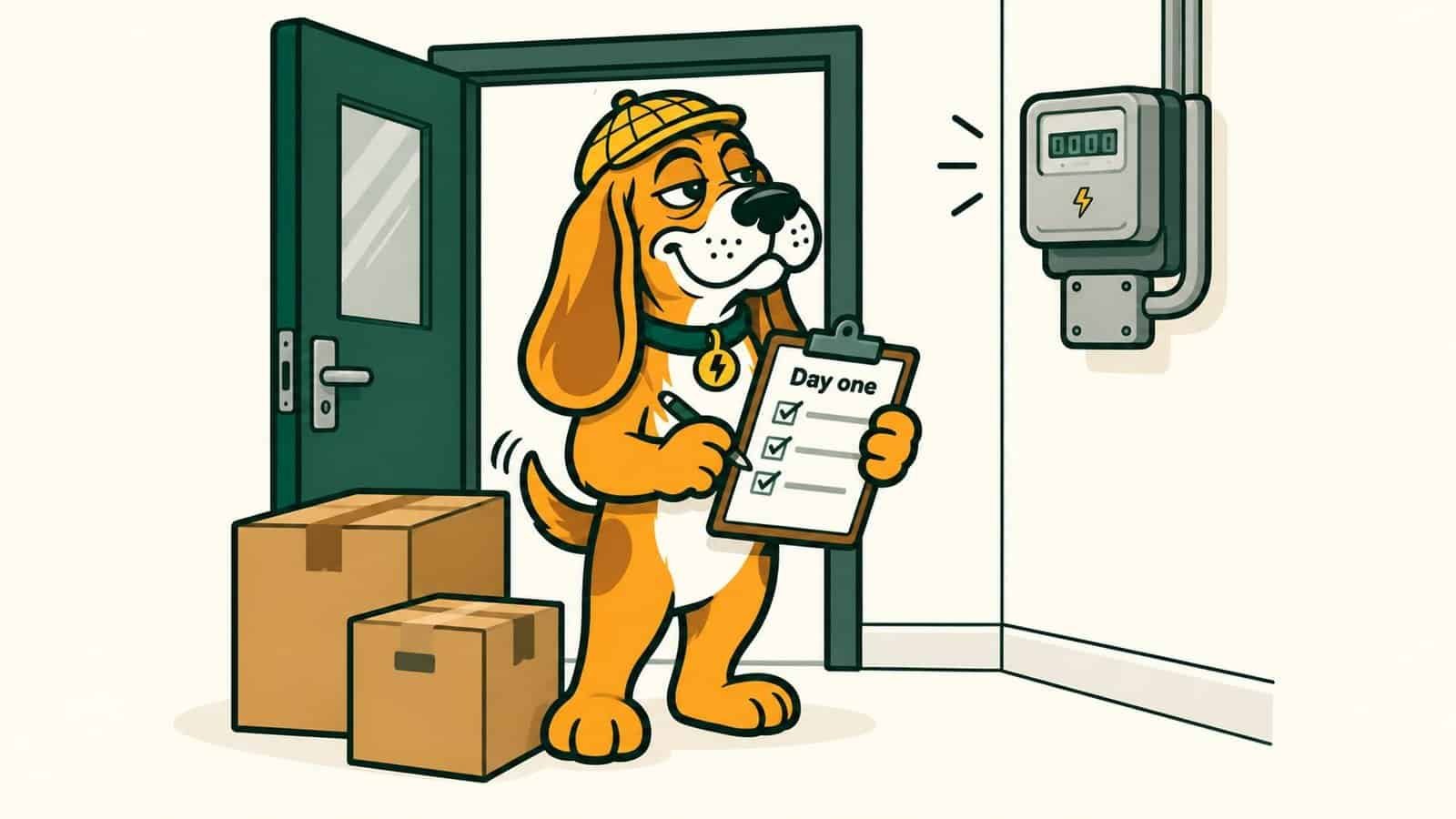
The day you get the keys to new business premises, the energy is already running and somebody is already paying for it. If you have not arranged a contract, that somebody is you, on a deemed rate you never chose. A business relocation already has enough checklists of its own, but the energy one takes one phone call and about ten minutes on the move-in day, and it stops the two classic moving mistakes: paying the previous tenant’s utility bills, and sitting on deemed rates for months because nobody got round to it.
This is that moving premises checklist, in the order to do it. It covers what to arrange before you move in, the meter routine for day one, the evidence your supplier will ask for, and how the change of tenancy actually works. It sits alongside our guide to what you need for a business energy quote, which covers the quote itself.
The short version
- Try to have an energy contract arranged before you move in. If you do not, you will usually land on a deemed contract with the previous tenant’s supplier, which is rarely a competitive rate.
- On day one, photograph every gas and electricity meter reading and note the date. Do it even if the meters are smart.
- Tell the current supplier for the property you have moved in, as soon as you can. Ofgem calls this the change of tenancy process, and it applies whether or not you plan to stay with that supplier.
- Have your evidence ready: tenancy or lease agreement, property sale documents or title deeds. Suppliers review change of tenancy requests within 10 working days.
- Moving out of your old premises has its own four steps. Skip them and you can be charged for the next tenant’s energy.
Before you get the keys
Citizens Advice’s advice is to try to have an energy contract arranged with a supplier before you move in. That does two things: it means you know what you are paying from the first day, and it flushes out any surprises early. One surprise worth knowing about is a connection fee, which can apply if the previous tenant was disconnected or the property is brand new.
Arranging a contract before you have the keys is easier than it sounds, because you already have most of what a quote needs: the address, the meter type if you can get it from the agent, and a rough idea of your usage from your current bills. Our preparation checklist for a business energy quote lists the details. If the property is new to you and you cannot estimate usage, say so. An honest estimate with the usage reviewed after a few months beats a guess presented as fact.
If you cannot get a contract in place before moving day, do not panic. The lights still work. The previous occupier’s supplier simply keeps supplying the property and bills you on a deemed contract until you put something in place. More on that in a moment, because it is the expensive way to drift.
Day one: the meter routine
On the move-in day itself, before the kettle goes on, walk the meters. Photograph every gas meter and electricity meter reading with your phone and make a note of the date. Citizens Advice is explicit that you should do this even if the premises has smart meters, because smart meters are not always working in smart mode, and your own dated photo is the record nobody can argue with later.
Those opening readings are your line in the sand. Everything before them is the previous occupier’s responsibility; everything after them is yours. Confirm the readings with the supplier when you set up the account so the first bill starts from your number, not an estimate the supplier invented. EDF’s moving-in process asks for exactly this: a meter reading on the day you take responsibility for the property, plus a current photo of the meter.
While you are there, note the meter details too: the meter serial number on the front of each meter, and the MPAN (for electricity) and MPRN (for gas) if you can find them on an old bill left behind or from the landlord or agent. Those two numbers are the supply point IDs for the meters, and you will be asked for them, so having them saves a second trip. One more check: if either meter is a prepayment meter with a card or key, tell the supplier on day one, because you do not want to be topping up on the previous occupier’s rates while the account moves over.
The change of tenancy paperwork
When a business changes property, Ofgem calls it a change of occupier or change of tenancy, and its guidance says you should tell the current energy supplier for the property as soon as you can. That applies if you are the business moving in, and it applies even if you are already talking to other suppliers about a contract. Telling the current supplier is what stops billing complications later, including bills addressed to a business that no longer exists at that address.
The supplier will ask for evidence that the change has really happened. Ofgem’s list is tenancy or lease agreements, property sale documents, or title deeds. Citizens Advice’s version of the same list adds a landlord confirmation letter if you are renting, confirmation from the solicitor or estate agent handling the move, a copy of your business rates statement, or the mortgage completion letter if you bought the property. One or two of these is normally enough.
Once the supplier has your evidence, it reviews the change within 10 working days and does one of three things: closes the old account and opens a new one in your name, rejects the change with a reason, or asks for more information. If it asks for more, it has to say what is missing and why; Ofgem’s examples include mortgage documents, business rates bills, or letters from a bank, solicitor or landlord. If the review drags past 10 working days, or the extra requests feel unreasonable, that is a complaint: first to the supplier, then to the Energy Ombudsman if it does not resolve.
Switching supplier when you move
A move is a natural moment to look at the market for your energy supply, because you are not mid-contract at the new address: you inherit the previous occupier’s supplier only until you put your own contract in place. If you arrange your supply with a different supplier, Ofgem says to notify both the new supplier and the current one, and to provide your evidence to both. The new supplier starts the switching process and can help with the paperwork.
One wrinkle to know about: the current supplier can reject the switch if it does not agree a change of occupier has happened, and it must give a reason. That is almost always an evidence problem, not a dead end, so the fix is the documents from the section above. Once the change of occupier is accepted, the switch completes and the old account closes. Our guide to how switching business energy supplier works covers the process step by step.
If you want to compare what is on offer before committing, the same like-for-like rules apply as always: identical usage, identical start date, identical contract length and every charge included. Our guides to comparing quotes once every charge is included and comparing a renewal offer with a new quote walk through the method with worked examples.
The deemed-rate trap
If you move in and do nothing, the previous occupier’s supplier keeps the property supplied and puts you on what is called a deemed contract. Citizens Advice warns that deemed tariffs can cost a lot more than other tariffs, and with business energy prices moving as they do, a deemed rate is rarely where you would choose to sit. That is the trap: not that anything breaks, but that nothing does. The energy works from day one, the bill is someone else’s problem until it lands, and by the time it does you may have spent months on rates you would never have chosen.
The way out is simply to treat the energy as day-one business, not month-three business. Arrange a contract with the existing supplier or a new one as soon as you can. For most businesses that means a fixed-rate tariff on a fixed-term contract, so the unit rate holds for the term, but variable tariffs and other flexible rates exist and suit some situations. Whatever you pick, compare the business tariffs on their unit rates and standing charges, not just the headline. You do not have to stay with the supplier you inherit, and the deemed period does not lock you in.
Moving out of your old premises
Moving has a second checklist, for the premises you are leaving. Citizens Advice gives four steps, and the point of all four is that you stop paying for energy the next tenant uses:
- Tell your energy supplier the date you are leaving, as soon as you can.
- Give the supplier your new business address, or another forwarding address, so the final bill finds you.
- Photograph your gas and electricity meter readings on your last day and note the date, even if you have smart meters.
- Switch everything off when you leave. Until the account is closed, usage can still be charged to you.
Closing the old account properly also keeps your credit record clean: energy bills that never reach you, because the supplier had no forwarding address, can turn into a collections problem for a business that thought it had done nothing wrong.
How BES fits in
Moving premises is one of the moments when having someone else do the chasing pays for itself in time. Send us your latest bill from your current premises, tell us the move date and the new address, and we will introduce you to our energy partner, who gathers quotes and options for the new property from over 50 suppliers. You compare them and make the call. Start here: businessenergysolutions.co.uk.
Frequently asked questions
What should I do about energy on my first day in new business premises?
Photograph every gas and electricity meter reading and note the move-in date, even if the meters are smart. Then contact the current supplier for the property to tell them you have moved in, confirm your opening readings, and start the change of tenancy. If you have not arranged a contract yet, treat that as the next job, because you will otherwise be billed on a deemed contract.
Who is the energy supplier when a business moves into new premises?
Until you arrange your own contract, the previous occupier’s supplier keeps supplying the property and bills you on a deemed contract. If you do not know who that supplier is, you can find out who supplies the gas and electricity for the address. You are not locked in: you can arrange a contract with that supplier or switch to a new one.
What is a deemed contract when moving into business premises?
A deemed contract is the default arrangement that covers you when you use energy at a property without agreeing a contract first. Citizens Advice warns it can cost a lot more than other tariffs. It does not lock you in, and it ends as soon as you agree a proper contract, so the only real cost of a deemed contract is how long you leave it running.
What evidence do I need for a change of tenancy with an energy supplier?
Typically one or two of: your tenancy or lease agreement, property sale documents or title deeds, confirmation from your landlord, confirmation from the solicitor or estate agent handling the move, a business rates statement, or your mortgage completion letter if you bought the property. The supplier reviews the evidence within 10 working days and must tell you if it needs something more.
How long does a change of tenancy take with a business energy supplier?
Ofgem says the supplier should review your documents within 10 working days, then close the old account and open a new one, reject the change with a reason, or ask for specific extra information. If it takes longer than 10 working days without good reason, complain to the supplier first, then the Energy Ombudsman if it stays unresolved.
Can I switch energy supplier as soon as I move into new business premises?
Yes. You are not tied to the supplier you inherit at the new address. Tell both the new supplier and the current one about the change of occupier and give your evidence to both; the new supplier starts the switch. The current supplier can reject the switch only if it does not accept the change of occupier, and it must give a reason.
Do I need to photograph the meters when my business moves premises?
Yes, at both ends. Photograph the readings on your last day at the old premises and your first day at the new one, and note the date each time. Do it even with smart meters, because they are not always operating in smart mode. Your dated photos are what stop you paying for another business’s usage at either address.
Sources and checks
- Ofgem: Change of tenancy for businesses (guidance published 27 June 2025) – notify the current supplier as soon as you can, the evidence suppliers ask for, the 10-working-day review, switching during a move, and the complaints route.
- Citizens Advice: Dealing with your energy supply when you move business premises – arrange a contract before moving in, the deemed contract warning, the proof-of-move list, photographing meter readings at both ends, and the four moving-out steps.
- EDF: Moving your small business property – a supplier’s own moving-in process: a meter reading on the day you take responsibility, the legal document and meter photo, and confirmation within 10 working days.
Sources checked 20 October 2026. This is general guidance, not advice on your specific contract; your supplier can confirm the process for your meters.