By Martyn Lenthall | Business Energy Solutions | Sources checked 14 November 2026
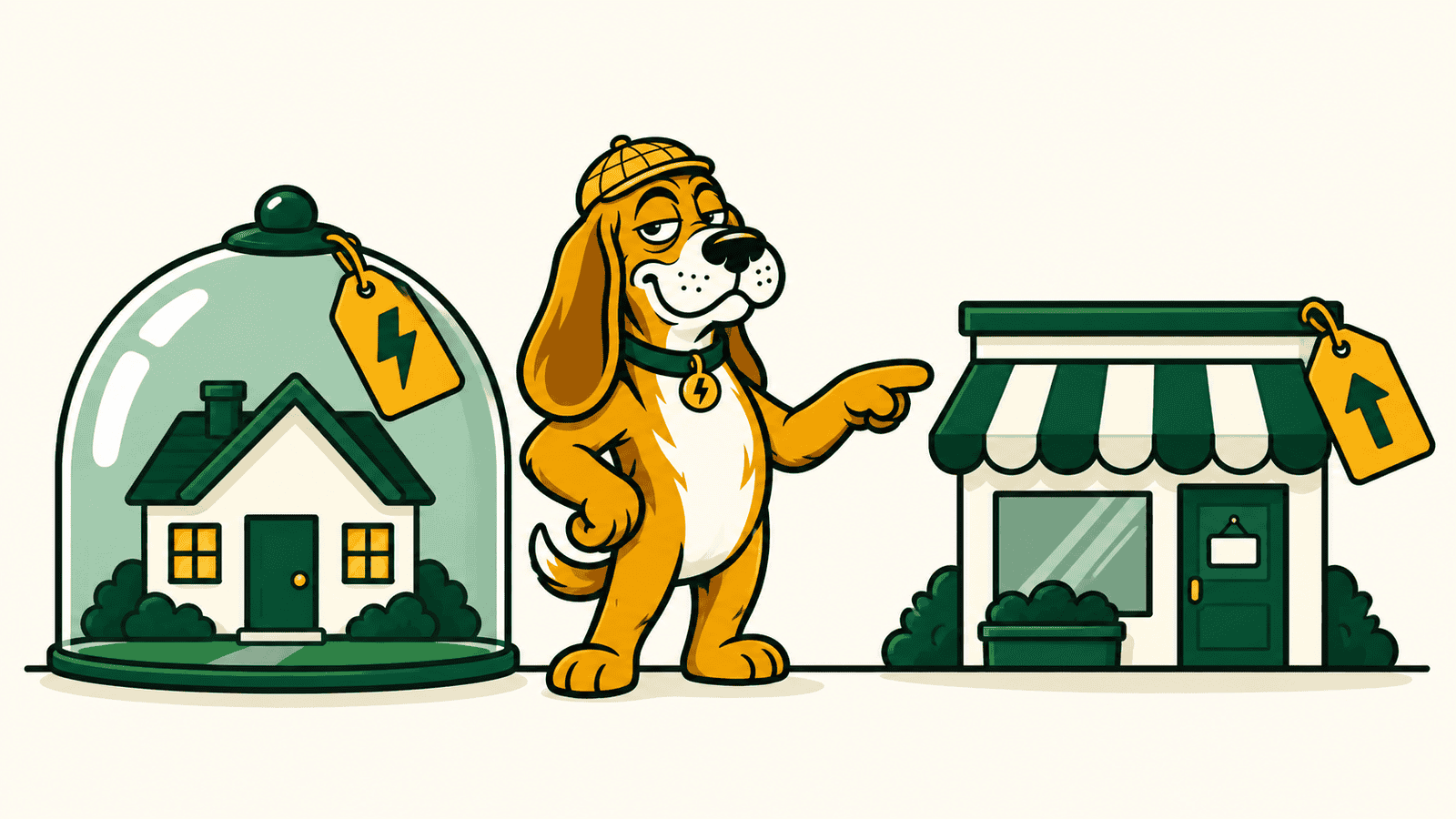
No. The energy price cap only applies to domestic energy contracts – the gas and electricity tariffs for people’s homes. There is no price cap for business energy in the UK, which means there is no maximum unit rate or standing charge a supplier can charge a business. Business prices are set by the contract you agree, so the deal you sign, or fail to sign, decides what you pay.
What the energy price cap actually is
The energy price cap is set by Ofgem, the energy regulator. It is the maximum amount energy suppliers can charge domestic customers for each unit of electricity and gas (the unit rate, measured in kilowatt hours) together with the daily standing charge. The cap covers domestic customers on standard variable tariffs and other default tariffs. How the household pays makes no difference: Direct Debit, payment on receipt of a bill, and prepayment meters are all covered. Single rate tariffs and multi-rate tariffs such as Economy 7 are covered alike. Fixed-rate tariffs sit outside the cap, and tracker tariffs work differently again. The cap also does not apply to business energy contracts, heat networks, or heating oil.
Ofgem calculates the cap from the real costs suppliers face: wholesale energy prices, network costs, policy costs, supplier operating costs, and taxes and levies. It publishes unit rates and standing charges using Typical Domestic Consumption Values, so the headline “cap” figure in the news is an illustration for a typical household, not a limit on anyone’s total bill. Either way, that number has no direct bearing on what your business pays.
Why businesses are not covered
Business energy works on contracts, not on capped standard tariffs. When your business takes on an electricity or gas supply, the price is agreed for the length of that fixed-term contract – one, two or three years is common. Because every business uses energy differently, suppliers price each contract individually, using your energy consumption, meter type, location and credit position. The contract structure can also include broker fees where a broker or introducer arranged the deal, so it is worth asking what is built into the unit rate you are quoted.
Two situations catch businesses out precisely because there is no cap:
- If your contract ends and you do nothing, the supplier can move you onto out-of-contract rates, which are uncapped and usually far more expensive than fixed-term rates.
- If you move into premises without arranging a contract, you are placed on a deemed contract automatically. Deemed rates are also uncapped and usually higher than negotiated rates.
Both are legal, common, and entirely avoidable. The absence of a cap is exactly why the renewal date matters so much for a business. A supplier’s out-of-contract or deemed rates exist to cover its risk on an unpriced customer, so they carry a heavy premium. Knowing your end date and acting a few months before it removes that risk completely.
What businesses have instead of a cap
Businesses are not unprotected – the protections just work differently. Instead of a price limit, Ofgem’s rules focus on clear contracts and fair treatment, and they strengthen as the business gets smaller.
A microbusiness gets extra protections. Ofgem defines one as having fewer than 10 employees and a turnover or balance sheet of no more than £2 million, or usage under 100,000 kWh of electricity or 293,000 kWh of gas a year. Its supplier must provide clear contract information. Termination notice periods on evergreen contracts are limited to 30 days. The supplier must acknowledge a request to end a contract within 5 working days, and provide renewal price information before the contract ends.
Microbusinesses and small businesses (11 to 50 employees, or usage up to 200,000 kWh electricity or 500,000 kWh gas) can also get support with energy contracts from Citizens Advice, and help with unresolved supplier complaints from the Energy Ombudsman.
One protection businesses do not get is a cooling-off period. Once you agree a business energy contract – including verbally, on the phone – you are normally bound by it. That makes it worth understanding what you are agreeing before you agree it, and why who helps you arrange the contract matters.
Didn’t the government cap business energy during the crisis?
For a limited time, yes – in effect. During the 2022-23 energy crisis, households got the Energy Price Guarantee. Businesses were covered first by the Energy Bill Relief Scheme and then the Energy Bills Discount Scheme, which discounted business energy prices between October 2022 and 31 March 2024. That government support has been withdrawn. As of November 2026 there is no equivalent cap or discount scheme for business energy. Household schemes such as the Warm Home Discount and the Household Support Fund exist for domestic customers in specific circumstances. There is no business energy price cap. Business energy costs are once again purely a matter of the contract you agree.
If you run your business from home
If you work from home, you are probably on a domestic energy contract, which means the price cap does apply to you. Ofgem’s advice is to check with your supplier if you are unsure. The cap follows the type of contract, not the building. A shop, office, workshop or unit on a business contract is uncapped. A home office on a domestic tariff is covered. If part of your home usage is genuinely business use, that is a question for your supplier and your accountant, not something the price cap decides.
What this means for your business
Without a cap, only two things control what your business pays: the contract in place today, and the one that replaces it. That cuts both ways. There is no safety net if you drift onto deemed or out-of-contract rates. But there is also no ceiling stopping you from getting a better deal when you compare the market properly ahead of renewal. Simple habits help here. Regular meter readings keep bills accurate, and an energy audit can show where consumption is being wasted before you even talk about price.
That is where we come in. Send us your latest bill and we will introduce you to our energy partner, who gathers quotes and options from more than 50 suppliers. You compare them, and you make the call. It is a free service – we will find you the best deal we can at absolutely no cost to you. Get Bes on the case
Frequently asked questions about the energy price cap and businesses
Does the energy price cap apply to small businesses?
No. The cap covers domestic tariffs only, whatever the size of the business. Even a one-person business on a business energy contract is uncapped; its protection comes from Ofgem’s microbusiness contract rules, not from a price limit.
Is there a business energy price cap at all?
No. The Ofgem energy price cap has never applied to business energy contracts. Business prices are set contract by contract, and deemed and out-of-contract rates are uncapped.
Is there a maximum price a supplier can charge a business?
No maximum exists for business energy. The price is whatever the agreed contract says, and out-of-contract or deemed rates – which apply when no contract is in place – are uncapped and usually the most expensive way to buy energy.
Did the price cap ever cover businesses?
No. Businesses received temporary government discounts through the Energy Bill Relief Scheme and the Energy Bills Discount Scheme during the 2022-23 crisis, but that support ended on 31 March 2024 and was a discount scheme, not a cap.
Does the energy price cap apply if I work from home?
Usually yes, because home workers are normally on domestic contracts, which are capped. Check with your supplier: the cap follows the contract type, not the work you do in the building.
What is the difference between the price cap and a fixed contract?
The cap is a regulatory maximum on domestic default tariffs that changes over time. A fixed contract is a price agreed between you and a supplier for a set term. Business energy is only ever sold the second way.
How can my business protect itself without a price cap?
Know your contract end date, never rely on deemed or out-of-contract rates, and compare the market before you renew. Free support is available from Citizens Advice for micro and small businesses, and the Energy Ombudsman can help with unresolved supplier complaints.
Sources and checks
Sources checked 14 November 2026. Ofgem guidance and government schemes can change. This is general information, not a recommendation to enter a contract.
- Ofgem explains what the energy price cap is, what it includes, and which contracts it does not apply to: www.ofgem.gov.uk/energy-price-cap.
- Ofgem sets out how business energy contracts work, the protections for microbusinesses and small businesses, deemed and out-of-contract rates, and the absence of a cooling-off period: www.ofgem.gov.uk/your-energy-supply/how-manage-your-energy-supply/get-business-energy-contract.
- GOV.UK records the Energy Bills Discount Scheme, the crisis-era support for business energy, as withdrawn: www.gov.uk/guidance/energy-bills-discount-scheme.